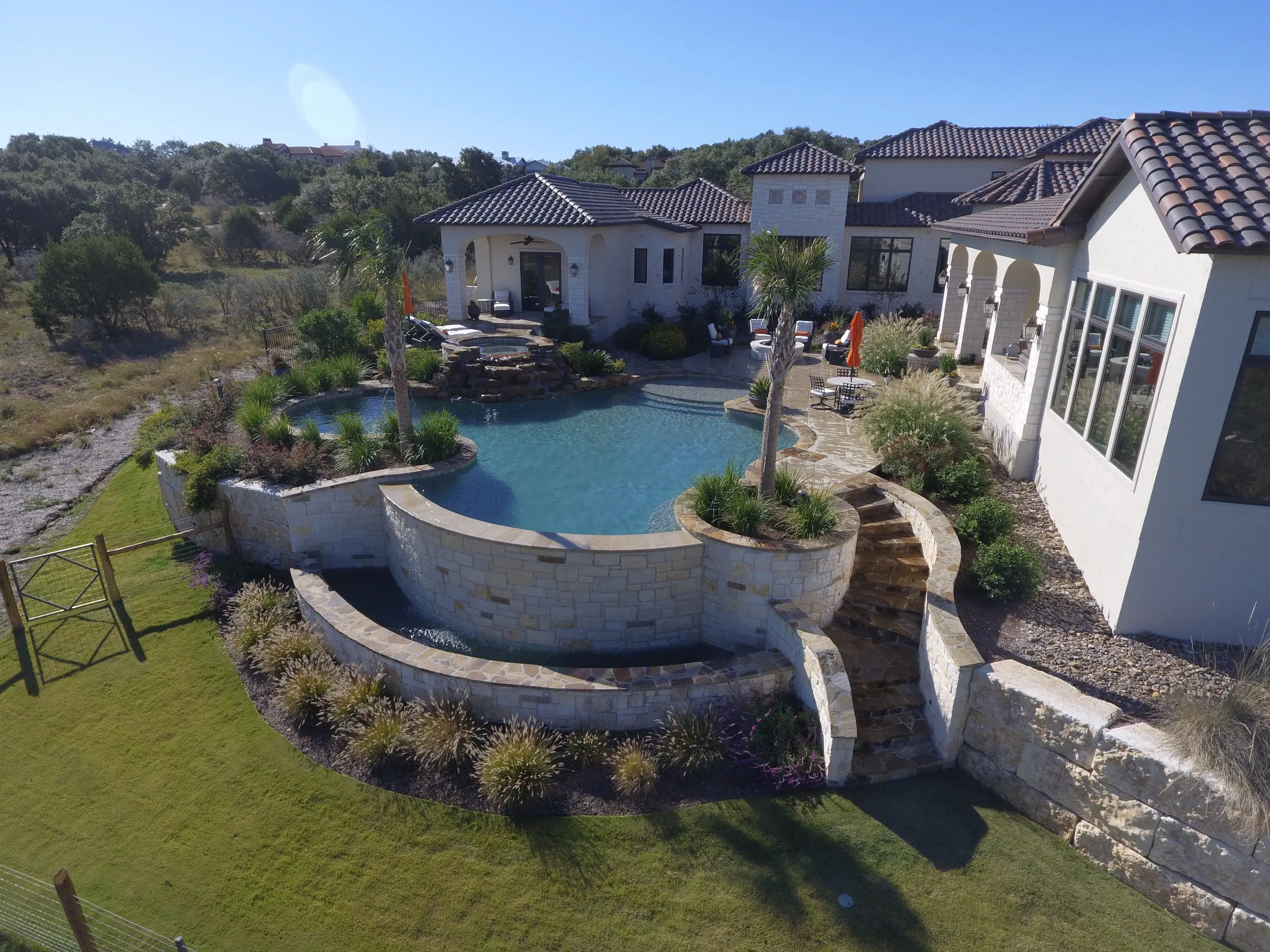
Guide · Hillside pool building Building a vanishing edge pool on a hillside.
A slope is the best thing that can happen to a vanishing edge pool, and the hardest. Here is what actually goes into building one in the Texas Hill Country.
How a vanishing edge pool works
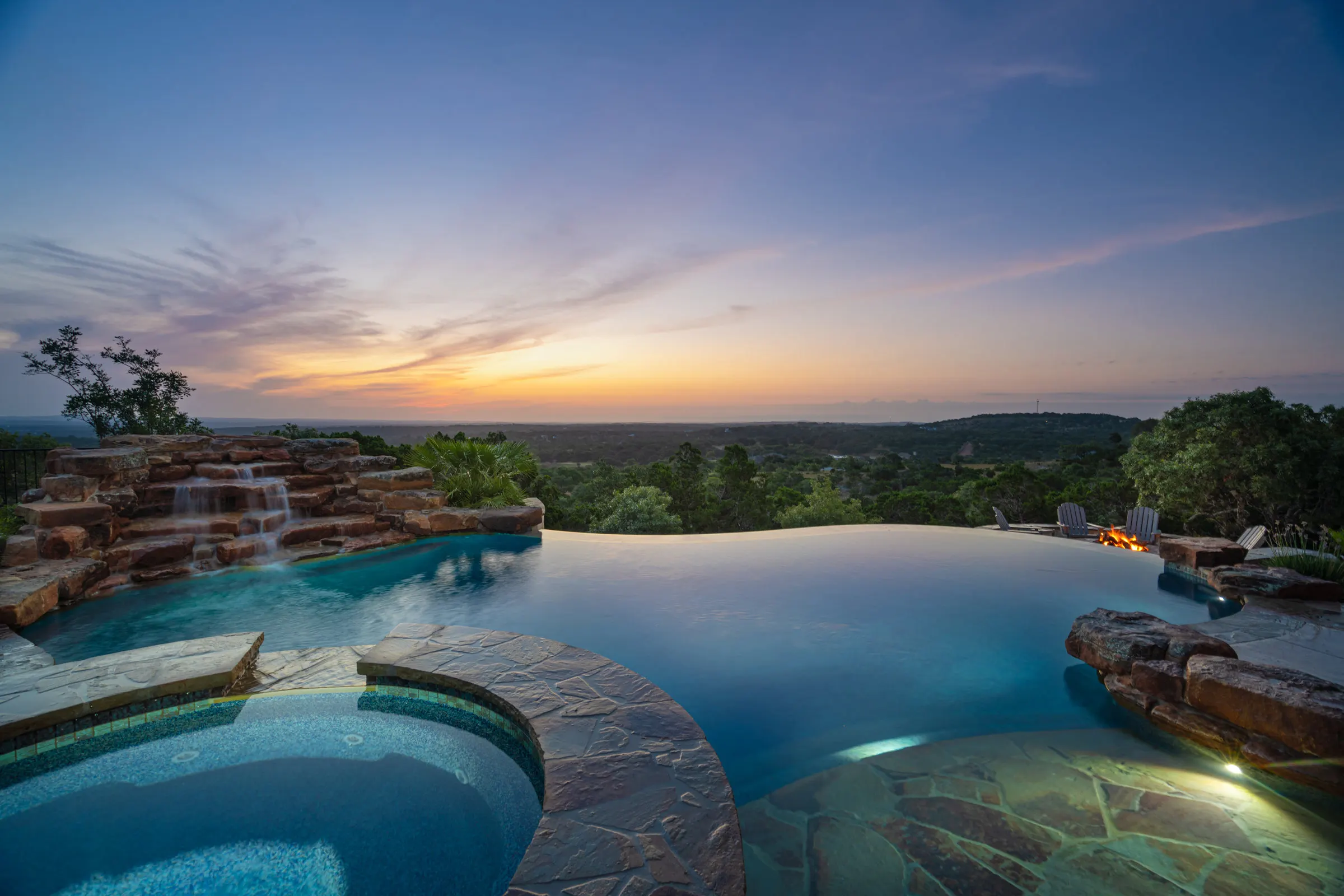
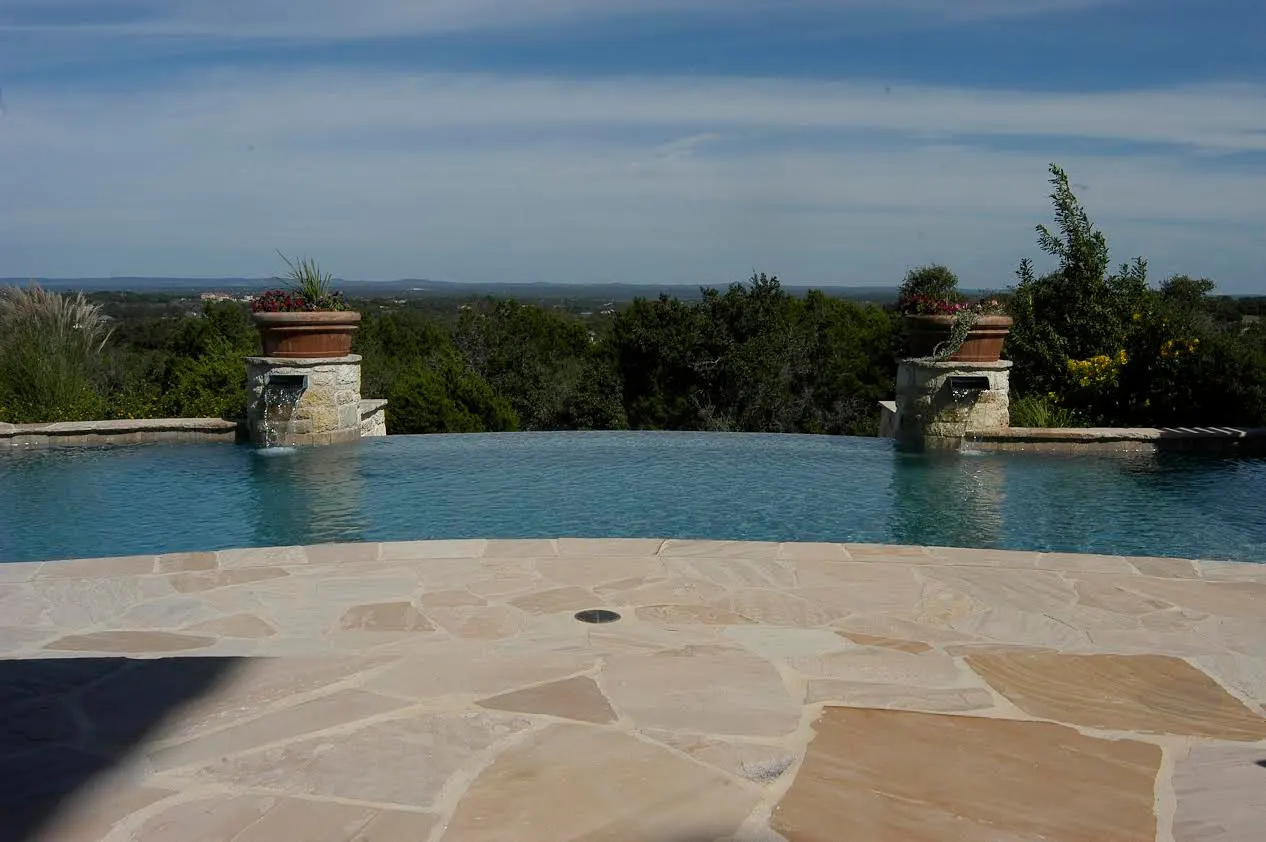
On one side of the pool, the wall stops at the waterline. Water flows over that edge and falls into a basin below. A pump returns it to the pool, and the cycle repeats. From the terrace, you see the surface of the water run straight out to the horizon. The name comes from that effect, and you will also hear it called an infinity pool.
Everything depends on that edge being dead level. If it is off by even a small amount, water will flow over one end and not the other. That is why precision matters far more on this pool than on a conventional one.
Start with the site, not the pool
Before anyone draws a pool, it is worth standing on the site at different times of day. Where does the view open up? Where does the sun set in summer? Where does the land drop away, and how fast? The right edge is the one that lines up with the view from where you will actually sit, which is often the house or main terrace.
This is the work of landscape architecture: reading the land first, then fitting the pool, terraces and house into one composition.
Rock, soil and structure
In most of the Hill Country, limestone and caliche sit close to the surface under thin soil. In other areas, such as north of Fredericksburg, the ground turns granite and sandy. A hillside pool usually ends up partly cut into the slope and partly standing out from it, so one side bears on rock while the other carries a tall exposed wall.
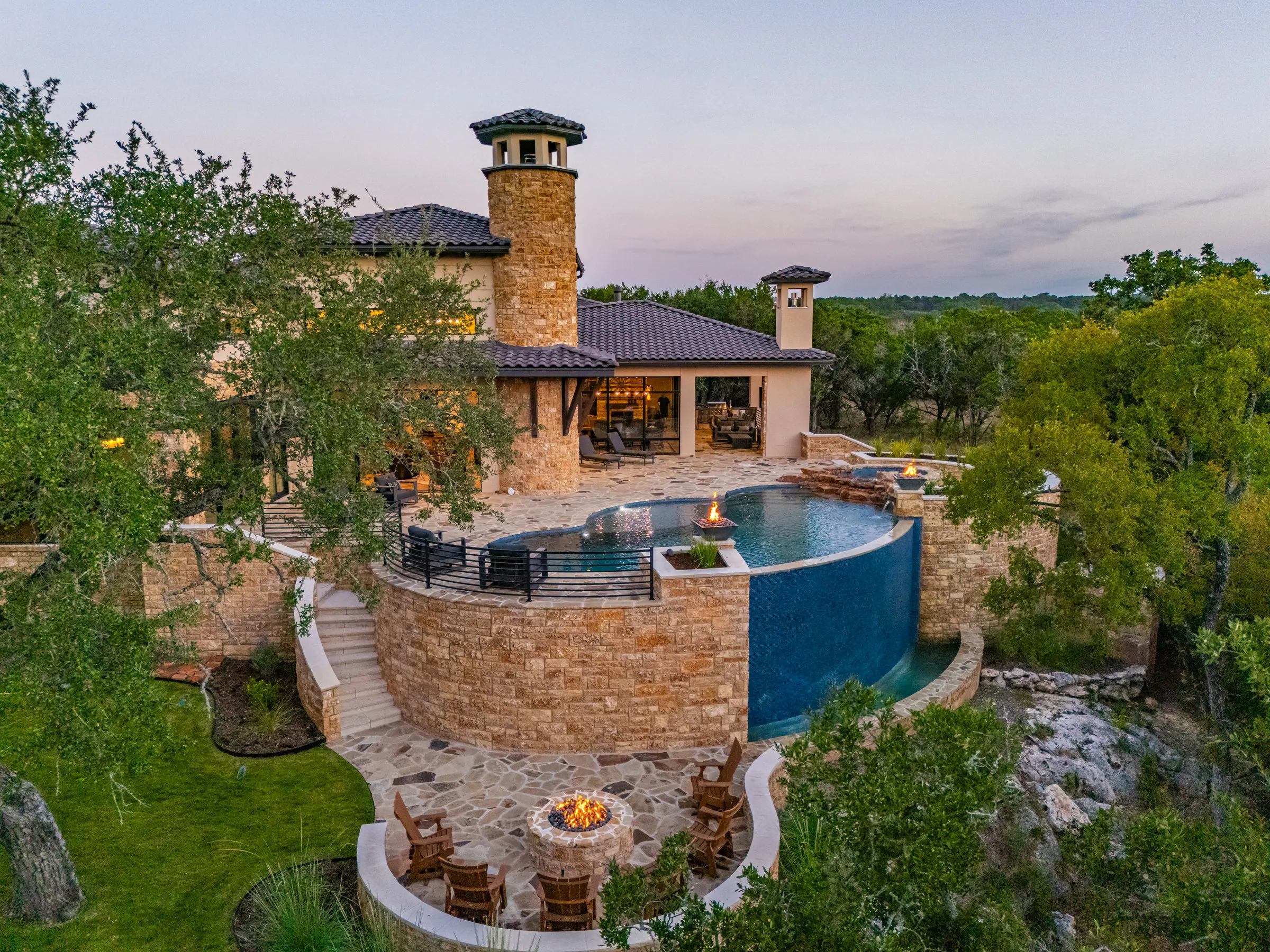
That exposed wall has to hold the weight of the water and resist the pull of the slope. Structural engineering is what makes it work. We treat it as part of the design, not a step after it, which is why it sits inside our custom pool scope. On our resort-style project, that wall stands 14 feet tall.
The wall you see from below
Most people think about the view from the pool. But the view of the pool, from the lawn or the lower terrace, matters too. The vanishing wall can be a tall face of water, stone or tile, and it is often the most prominent thing on the property from below. It deserves as much design attention as the coping. Lighting matters here as well: at night that wall can become a sheet of lit water.
Walls, stairs and drainage
A pool on a slope rarely stands alone. Most need retaining walls, terraces and stairs to create level space and connect the levels. Those surfaces also send rainwater downhill, so grading and drainage have to be planned at the same time. Hill Country storms are short and heavy, and water needs a planned path around the pool.
Why one team matters
On a project like this, the design, the engineering and the construction depend on one another. A change to the wall height affects the structure, the stairs and the view. When one firm is responsible for all of it, those decisions are made once, by people who will have to build them. You can read more in our guide to design/build vs. a separate designer and builder.
See it in our work
Common questions
01 What is the difference between a vanishing edge pool and an infinity pool?
They are two names for the same thing: a pool with an edge that water flows over into a basin below, so the surface appears to run out to the view.
02 Does a vanishing edge pool need a sloped lot?
A slope is what makes it work best, because it hides the basin and gives the water somewhere to fall. Some flatter sites can work, but the effect comes from the drop.
03 Why do vanishing edge pools cost more than conventional pools?
They need more structure, a second basin, additional plumbing and pump capacity, and more precise construction. The hillside site often adds retaining walls and site work too.
Begin your project